Maximizing internal usable area is a central focus of modern residential architecture. As families choose to expand vertically by constructing multi-story villas, cozy duplexes, and stylish multi-tiered penthouses, managing domestic floor space becomes a vital engineering puzzle. Introducing vertical mobility into these compact blueprints can sometimes feel like an overwhelming task.
Many homeowners believe that installing an elevator requires a massive concrete shaft, a separate engine room, and deep foundation pits that eat up premium carpet area. This common misconception often prevents people from exploring vertical transport options early in their home design.
The elevator industry has responded to tight urban layouts with highly sophisticated engineering. Modern compact residential elevators are designed specifically to bring premium luxury and essential accessibility to homes with limited floor space.
By shrinking mechanical motor assemblies, utilizing high-strength lightweight materials, and removing old-school architectural requirements, these micro-mobility systems can fit into spaces as tight as a standard wardrobe or a small stairwell corner. This structural beginner guide explores the engineering behind space-saving lifts, helping you select the perfect vertical solution for your unique home layout.
Quick Answer: How Compact Can Modern Residential Elevators Be?
Modern compact residential elevators require minimal space, with some models fitting into a footprint as small as one square meter. By utilizing Machine Room-Less traction engineering or specialized pneumatic vacuum systems, these micro-elevators eliminate the need for separate equipment rooms and deep foundational pits. This allows them to integrate easily into tight stairwells, closet spaces, or unused corners in existing homes.
The Space Dilemma: Rethinking Mobility for Tight Floor Plans
When a home features a compact layout, every square foot matters. In dense urban residential zones, adding a traditional commercial-style elevator is practically impossible due to the extensive space requirements of old-school installations.
Standard commercial lift installation layouts demand wide concrete structural shafts, deep defensive pits at the ground floor, and high overhead clear heights at the terrace level to store heavy mechanical machinery. For an average city duplex or a compact three-story row house, sacrificing a massive block of central living space to accommodate a large elevator shaft disrupts the entire home flow.
This is where specialized residential elevator solutions step in to bridge the gap. Instead of forcing commercial infrastructure into a private home, modern manufacturers design systems specifically tailored to domestic residential settings.
These compact systems focus on optimizing the ratio between the total external footprint of the shaft and the internal usable space of the cabin. This precise engineering ensures that you get maximum cabin comfort inside while taking up minimal space from your living areas.
Compact Structural Options: Beginner Guide to Small Home Lift Designs
Navigating the technical variations of small-footprint elevators is easy once you understand the basic structural layouts. Here is a breakdown of the leading compact design variations engineered for space-constrained homes.
1. The Integrated Machine Room-Less (MRL) Traction Design
Machine Room-Less technology is a major advancement for small-space home engineering. In this setup, the permanent magnet gearless motor is scaled down to a slimline profile and mounted directly onto the structural guide rails inside the top of the shaft.
Because the system uses high-strength suspension cables or flexible polyurethane belts, it eliminates the need for bulky external gearboxes. The entire mechanical footprint stays confined within the vertical boundaries of the hoistway, allowing architects to maintain clean, unobstructed roof terraces.
2. Mini-Hydraulic Systems with Slim Enclosures
When evaluating hydraulic lift vs traction lift options for small layouts, compact hydraulic setups remain a practical alternative. Instead of requiring a large independent engine room, modern micro-hydraulic lifts utilize highly compact fluid cylinders paired with a slim, wall-mounted control cabinet. This cabinet can be placed up to several meters away in an unused utility space or under a staircase, allowing the main lift shaft to remain as narrow and unobtrusive as possible.
3. Structural Steel and Glass Panoramic Hoistways
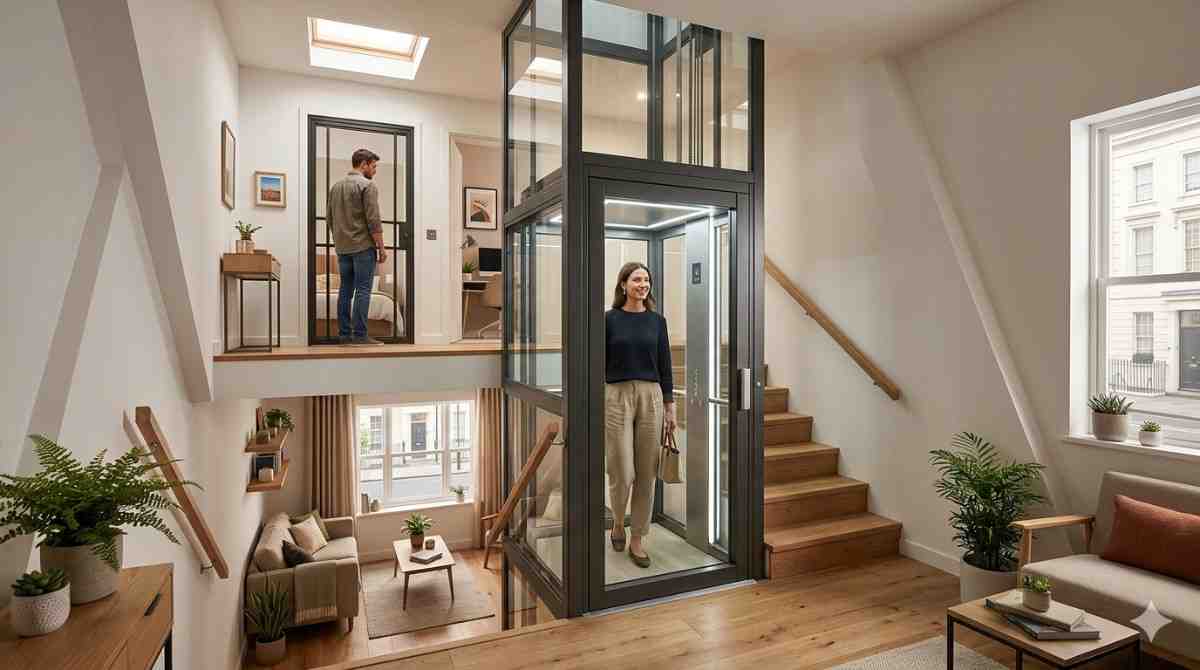
For homes that do not have a pre-existing brick-and-mortar elevator shaft, building a concrete enclosure can make small rooms feel dark and cramped. A popular solution is choosing a self-supporting structural steel frame enclosed with laminated safety glass panels.
This layout can be placed directly in the open center of a wrap-around staircase or positioned externally against an outer wall. The clear glass structure lets natural light pass through seamlessly, preserving open sightlines and making small living spaces feel larger.
4. Through-Floor Shaftless Systems
For homes requiring mobility across just two floors, through-floor shaftless lifts offer an advanced, space-saving alternative. These systems do not use a permanent vertical shaft. Instead, the lift cabin moves along two vertical steel guide rails that run through a neatly finished opening in the ceiling.
When the lift car is parked upstairs, the ground floor space is completely clear, allowing residents to walk beneath the installation area normally. When the lift descends, integrated safety sensors ensure the path below is entirely clear before completing the cycle.
Critical Factors to Consider Before Buying a Compact Lift
Selecting a micro-elevator involves evaluating several key structural and technical factors to ensure the system integrates smoothly with your home infrastructure.
Total Structural Footprint: Always look closely at the ratio between the outer shaft measurements and the inner cabin space. Premium manufacturers use slim guide rails and compact sliding door mechanisms to maximize internal cabin room within a small external footprint.
Pit Depth and Overhead Limitations: Look for systems engineered to operate with minimal structural excavation. Many compact traction models require a shallow pit of just three hundred millimeters, preventing the need to cut deep into your home foundation.
Electrical System Compatibility: Ensure the lift motor is designed to run efficiently on standard domestic power infrastructure. Selecting a system equipped with a variable-frequency drive allows it to operate smoothly on a standard single-phase power line, avoiding the need for an expensive upgrade to a three-phase connection.
Door Configuration Options: In narrow corridors or tight entryways, standard swing doors can block walking paths when opened. Choosing automatic bi-folding or multi-panel telescopic sliding doors keeps the landing entry clean and functional.
Common Small Home Lift Myths Exploded
As high-performance home lifts in India gain widespread popularity, several common misconceptions continue to influence buyers. Addressing these technical myths helps clarify the true capabilities of modern compact elevators.
Myth 1: Small elevators are less safe than large commercial ones
Fact: A smaller cabin size does not mean lower safety standards. Whether an elevator is large or small, it must comply fully with elevator safety standards India.
Compact systems feature the exact same high-level safety mechanisms found in large commercial installations, including robust mechanical overspeed governors, emergency brake claws, full-height infrared door sensors, and reliable interlocked landing gates.
Myth 2: Compact lifts are slow and noisy during operation
Fact: Older generations of small lifts sometimes relied on noisy chains or basic geared motors that caused noticeable vibrations.
In contrast, modern premium compact elevators utilize advanced gearless permanent magnet synchronous motors. By removing the traditional mechanical gearbox, these direct-drive systems operate quietly and provide smooth travel, keeping noise levels well within comfortable residential limits.
Myth 3: Retrofitting a compact lift requires major structural changes
Fact: Many homeowners worry that retrofitting an elevator will require tearing down concrete walls or modifying their roofline.
However, compact MRL systems are specifically engineered to minimize structural impact. Because they can be installed within a self-supporting steel framework or a shaftless configuration, they can be integrated into existing homes with minimal modifications to the surrounding architecture.
Why Choose CarryMax Lifts
When space is at a premium, precise engineering and careful installation are essential. CarryMax Lifts specializes in crafting high-quality, space-saving vertical mobility solutions tailored specifically for compact residential architecture.
Choosing CarryMax Lifts as your residential elevator partner brings several distinct advantages:
Extensive Manufacturing Experience: Our engineering teams understand the unique spatial challenges of modern urban properties, allowing us to design highly compact systems that optimize your available space.
Precision In-House Manufacturing: We utilize advanced manufacturing technologies to build durable, reliable components that fit perfectly into tight structural layouts.
Tailored Customization Options: We provide versatile design choices, including slim automatic doors, custom interior glass walls, and compact luxury cabins tailored to match your specific home decor.
Uncompromising Safety Standards: Every system we manufacture features advanced multi-tier mechanical brakes, an integrated Automatic Rescue Device for power outages, and full-height door sensors.
Strong Service Network in Delhi NCR: With a dedicated technical support presence covering Delhi, Noida, Gurgaon, Ghaziabad, and Faridabad, our local teams ensure smooth installation, regulatory guidance, and dependable long-term lift maintenance services.
From supplying specialized compact goods lift systems to executing high-end residential elevator installations, CarryMax Lifts provides expert engineering support from start to finish.
Conclusion: Elevating Small Spaces with Modern Engineering
Integrating a premium elevator into a limited floor plan is fully achievable through modern engineering. By choosing a compact residential elevator design, you can add convenient accessibility and enhance your property's long-term value without sacrificing valuable living space.
Technologies like Machine Room-Less gearless motors and self-supporting glass shafts allow you to maintain an open home flow while enjoying smooth, quiet, and highly efficient vertical transport. Working with an experienced manufacturer ensures your small-footprint elevator is perfectly tailored to your space.
Get in touch with the specialized consulting desk at CarryMax Lifts today to explore our compact cabin profiles, request detailed layout drawings, and receive a customized technical proposal for your home.